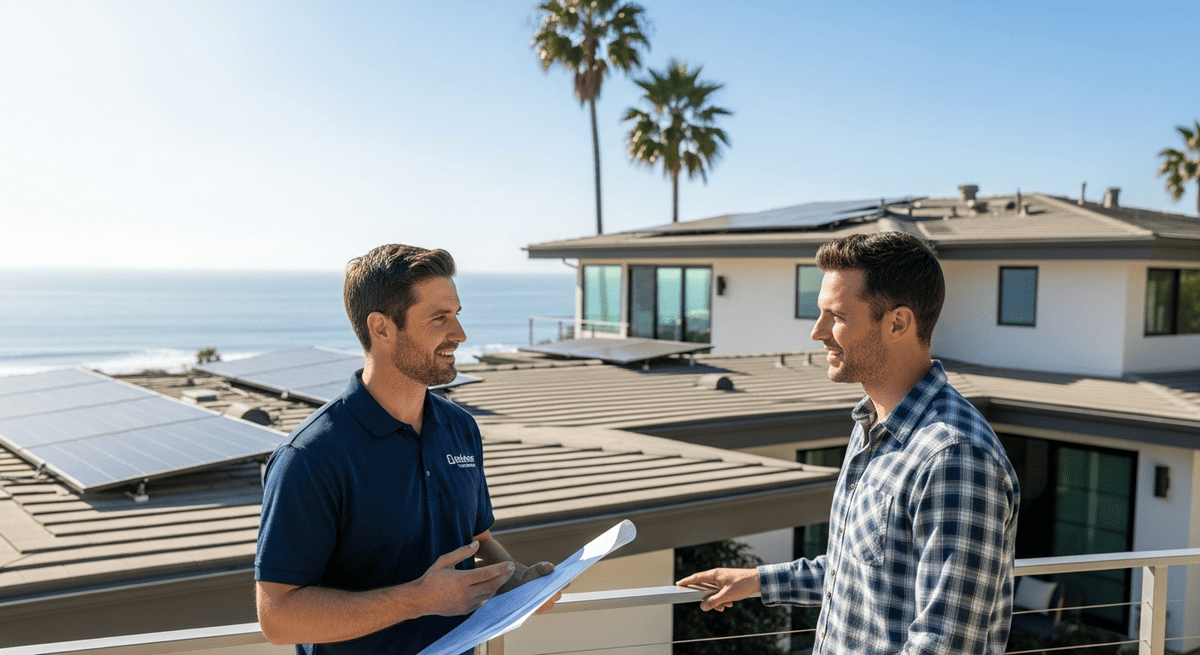
Choosing the right contractor is important for Malibu solar installation. Salt air can damage metal parts, and hillside roofs or strong winds may affect how panels are mounted. Some neighborhoods also have strict permit checks and fire safety rules.
A reliable Malibu solar contractor is familiar with local permitting and inspection requirements and holds the necessary licenses and insurance. They plan wiring, roof penetrations, and equipment placement with care. Request specific panel and inverter models in your quote, along with details on the workmanship warranty.
Before signing, compare quotes using the same details. Check system size in kW, estimated annual kWh, and the complete scope of work. Confirm who manages permits, the installation timeline, and cancellation terms. This approach helps control costs and ensures long-term system performance.
Step-By-Step Checklist To Choose A Solar Contractor In Malibu
Finding the right solar contractor in Malibu requires research. Use this checklist to guide your selection process.
- Gather 12 months of utility bills to show your energy consumption and peak usage months.
- Research 3 to 4 local installers with Malibu experience and strong online reviews.
- Check CSLB licenses for each company using the California State License Board website.
- Read Google, Yelp, and BBB reviews for feedback on communication, quality, and service.
- Request site visits from your top 2-3 choices so they can see your roof and shade conditions.
- Compare written proposals side by side for price per watt, equipment, and warranties.
- Verify insurance by asking for certificates and calling the insurer to confirm coverage.
- Ask about permitting and confirm the contractor handles City of Malibu or LA County filings.
- Check warranty terms for panels, inverters, batteries, and workmanship.
- Sign with the contractor that meets your budget, timeline, and trust level.
If a contractor does not provide licenses, insurance, or permit information, consider other options. These are essential requirements. Long-term service is also important; companies without a local presence may not offer prompt support.
Why Malibu Homeowners Need The Right Solar Contractor
Malibu electricity rates average 19.90¢ per kWh. This leads to high monthly utility bills, making solar a smart financial choice for most homeowners in the area.
Malibu experiences approximately 259 sunny days annually. The Mediterranean climate provides hot summers, mild winters, and 8 to 9 hours of sunlight per day. With proper roof and system design, this sunlight can significantly reduce energy costs.
Malibu Climate Challenges
Salt air from the Pacific can corrode metal components if low-quality hardware is used. Wildfire risk is also significant, as many Malibu homes are in Very High Fire Hazard Severity Zones. Fire codes influence how crews install wiring and mount panels.
Hillside lots often result in challenging roof angles, and east- or north-facing roofs reduce solar production. Effective solar design accounts for these factors before installation.
Solar Unlimited In Southern California
Solar Unlimited has served coastal cities near Malibu since the late 1970s. The company is familiar with LADWP and Southern California Edison (SCE) rules. It understands City of Malibu permits and LA County plan checks. That local knowledge helps the installation process run on schedule.
Check Malibu Solar Contractor Licensing and Insurance
California law requires specific licenses for solar work. Verifying these licenses takes only a few minutes and can protect your roof and finances for years.
Required License Types
- A California solar installer needs an active C-10 (Electrical) license or a C-46 (Solar) license from the Contractors State License Board (CSLB).
- The C-10 covers electrical work, including solar panel wiring and inverters.
- The C-46 focuses on solar systems and thermal equipment.
How To Verify A License
- Visit the official CSLB website at ca.gov.
- Search by company name or license number.
- Look for an active status with no expired dates.
- Check for complaints or disciplinary actions on file.
A contractor with a clean record and no complaints is a safer choice for your home.
Insurance Requirements
- A Malibu solar contractor must carry general liability insurance to protect against property damage.
- Workers’ compensation insurance must cover every crew member working on your roof.
- Request written proof of insurance before any work begins.
- Contact the insurance provider to confirm the policy is current.
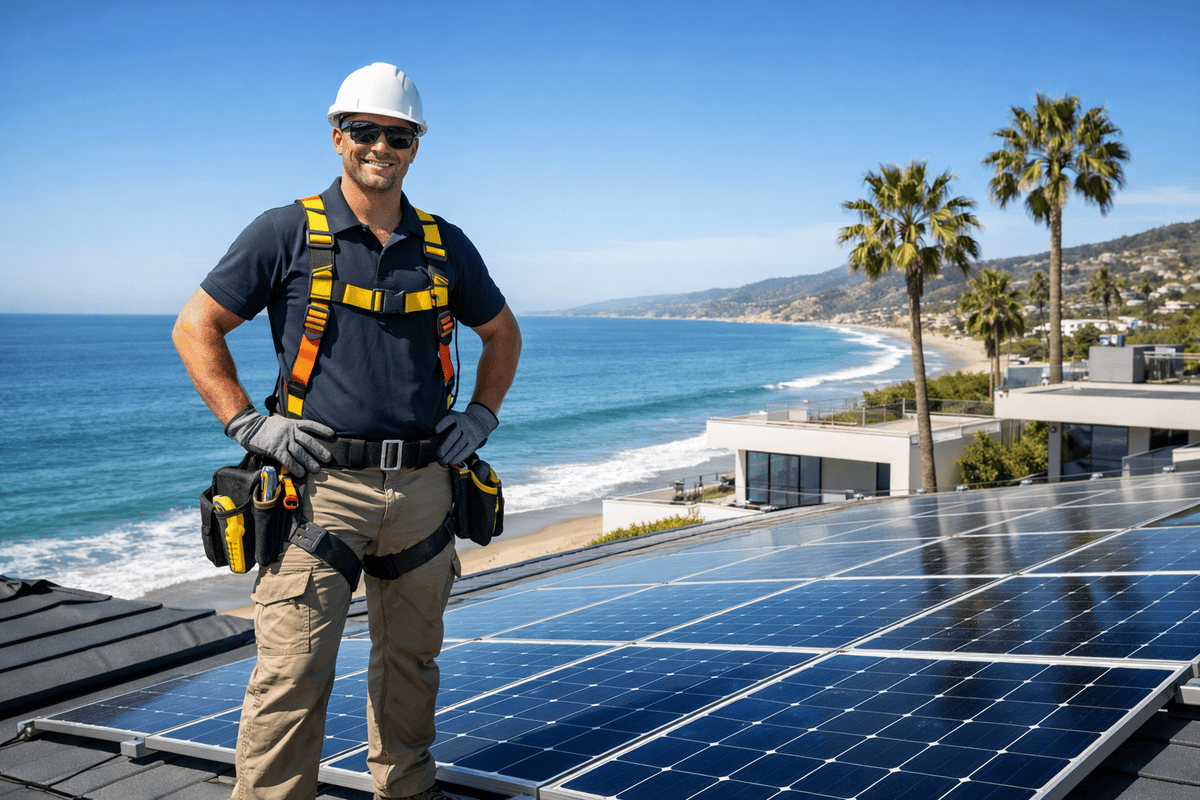
Local Malibu Experience, References, And Roof Expertise
Solar installations in Malibu differ from those in the San Fernando Valley or downtown Los Angeles. Coastal permits, salt exposure, and hillside lot regulations present unique challenges. Contractors with local experience are better equipped to address these issues.
August Roofing & Solar specializes in roof-integrated solar systems, which can be an advantage for certain Malibu homes.
Some contractors also offer commercial solar solutions tailored for Malibu businesses, helping stabilize energy costs and avoid peak rate increases.
Roof Types In Malibu
Malibu homes feature a variety of roof styles, each requiring specific mounting hardware and flashing.
| Roof Type | Common Concerns | Mounting Notes |
| Clay tile | Breakable tiles, fragile underlayment | Tile hooks, careful walking paths |
| Metal | Expansion in heat, corrosion risk | Standing seam clamps, no penetrations |
| Asphalt shingle | Age, cracking, wind lift | Standard mounts with flashing boots |
| Flat roof | Drainage, weight limits | Ballasted or attached systems |
Solar Design, Shading, And Malibu Sun Conditions
A reputable Malibu solar contractor will not provide a quote without first visiting your property. A site visit allows assessment of roof angle, shading, and available space. Contractors use advanced technology and proven methods to evaluate and optimize your solar project.
What Happens During A Site Visit
- The contractor measures roof dimensions and checks the pitch.
- Trees, hills, and neighboring buildings get studied for shade patterns.
- Sun path apps and shade meters map how shadows move across the roof.
Common Malibu Setups
- South-facing roofs produce electricity at peak rates during midday sun.
- West-facing roofs capture afternoon sun and help with evening energy consumption.
- Flat sections allow tilted racking to optimize panel angles.
- Ground mounts work well on large lots when roof space is limited.
Matching Panels to Your Usage
System design should align with your electricity usage, using at least 12 months of utility bills to identify peak months and seasonal variations. An undersized system results in continued utility costs, while an oversized system may lead to unnecessary upfront expenses.
Malibu homes with 5 to 10 kW systems typically offset 70% to 90% of utility bills. Solar Unlimited assists with determining panel count, inverter size, and battery options.
Permits, Codes, And Malibu Fire Zone Requirements
Malibu’s permitting requirements can extend project timelines. Reputable contractors manage all paperwork, eliminating the need for you to visit city offices.
Fire Zone Rules
- Many Malibu homes sit in Very High Fire Hazard Severity Zones.
- Wiring and conduit must meet strict fire codes.
- Rooftop access paths for firefighters shape panel layout.
- Non-combustible materials protect certain roof areas.
Permit And Plan Review Steps
- A contractor submits permit drawings to the City of Malibu or LA County.
- Structural calculations confirm the roof can support the panel weight.
- Plan reviewers check code compliance before approval.
- After installation, an inspector visits to approve the system.

Equipment Quality: Panels, Inverters, And Batteries
Purchasing low-cost equipment may offer initial savings but often leads to higher long-term costs. Inexpensive panels and inverters tend to wear out or fail sooner. In Malibu’s salty air, substandard materials can corrode within a few years.
Most solar panels require very little maintenance over their 30+-year lifespan, making them a reliable long-term investment.
High-quality parts can last 25 years or more, providing reliable power and requiring less maintenance. The higher upfront cost is often offset by long-term savings and reduced repair needs.
Solar Panels
- Tier-1 solar panels come from manufacturers with strong financials and proven track records.
- Look for 25-year performance warranties.
- Panels with strong salt-mist ratings resist coastal corrosion.
- Higher wattage panels produce more electricity per square foot.
Inverter Choices
The inverter converts DC power from panels into AC power for your house. Three main types exist.
| Inverter Type | How It Works | Best For |
| String inverter | Connects panels in a series | Roofs with little shade |
| Power optimizers | Each panel has an optimizer, one central inverter | Partial shade, varied angles |
| Microinverters | Each panel has its own inverter | Heavy shade, complex roofs |
Shade from Malibu trees or hillsides can affect which type works best. Microinverters allow each panel to operate independently, so a shaded panel does not reduce the performance of the entire array.
Trusted Brands
The market includes several respected names. Enphase and SolarEdge lead in inverters and optimizers. Q-Cells and REC make high-efficiency panels. Tesla Powerwall and Enphase batteries offer battery storage for outages.
These examples illustrate quality standards and are not endorsements over other reputable brands.
Battery Storage
A solar-plus-battery system stores excess energy for use at night or during outages. SCE conducts Public Safety Power Shutoffs during wildfire risk, and batteries help keep essential appliances and services operational during these events.
Battery integration in California increases by approximately 40% each year. Solar Unlimited recommends equipment with long warranties and strong service support in Southern California.
Warranties, Service, And Long-Term Support
A solar system can last 25 to 30 years. Warranties and service support matter for that entire span.
Equipment warranties cover panels, inverters, and batteries from manufacturers. Panels often carry 25-year warranties. Inverters range from 10 to 25 years. Batteries last around 10 years.
Workmanship warranties cover labor and roof penetrations. Top solar contractors offer 10 years or more of warranty. This warranty protects against installer errors, such as loose wiring or poor flashing.
Roof leak protection covers mounting points where water could enter. Malibu winter storms bring heavy rain, and leaks can cause significant damage if mounts fail. Ask contractors how they seal each roof penetration.
Price, Financing, And Malibu Solar Incentives
While price is important, quality and long-term savings are more critical. A low-cost installation that fails after five years will ultimately cost more than a quality system that lasts 25 years.
Malibu solar systems for an average home range from $20,000 to $40,000 before incentives. After applying the 30% Federal Solar Investment Tax Credit (ITC), net costs can fall below $2.50 per watt.
Tax Credits And NEM 3.0
The 30% ITC reduces your federal tax bill if you have sufficient tax liability. This credit phases down after 2032, so current homeowners can secure savings now.
California solar regulations changed under NEM 3.0, reducing export rates for selling electricity back to the grid. Batteries help maximize value by storing daytime production for evening use.
What A Good Proposal Includes
- Price per watt and total system cost.
- Itemized equipment list with brands and models.
- Estimated production in kWh per year.
- Projected payback period and estimated savings over 25 years.
- All warranties and service terms are in writing.
Reviewing Contracts And Agreements
Before proceeding with a solar energy system, carefully review your installer’s contract. A clear agreement protects your investment, sets expectations, and ensures you receive the anticipated savings and performance. The following tips will help you understand contract details and maximize your project’s benefits.
- Performance guarantees: Look for clear promises about how much electricity your solar panels will produce. The contract should specify expected output and what happens if the system underperforms.
- Payment terms: Review the total cost, payment schedule, and any available financing options. Make sure you understand when payments are due and how incentives or rebates will be applied to your final price.
- Maintenance and repair: Find out if the installer offers ongoing maintenance or repair services, and for how long. Ask what is included, like panel cleaning or inverter checks, and what services might cost extra.
- Warranty coverage: Confirm the length and scope of warranties for your solar panels, inverters, and other equipment. Understand what is covered, what isn’t, and how to make a claim if needed.
- Cancellation policy: Read the terms for cancelling the contract, including any fees or penalties. This protects you if your circumstances change before installation begins.
Reading Reviews And Checking Reputation
Thirty minutes of online research can provide valuable insights into a solar company. Customer feedback reveals how contractors treat homeowners.
- Google Reviews for overall ratings and recent comments.
- Yelp for detailed customer stories.
- Better Business Bureau (BBB) for complaint history and accreditation status.
- EnergySage for verified installer profiles and side-by-side comparisons.
What To Look For
- Malibu-specific reviews that mention communication and cleanup.
- Comments about post-install support and monitoring.
- How the company responded to any negative feedback.
- A long track record with many installed systems.
Questions To Ask Before Signing
Before committing, ask your installer these key questions to ensure you fully understand the agreement and the benefits of going solar:
What is the estimated savings on my utility bills?
Request a detailed estimate of how much you’ll save based on your current energy consumption and the proposed solar energy system.
What is the installation process, and how long will it take?
Get a clear timeline for the installation process, including any steps that might disrupt your daily routine.
What kind of maintenance and repair services are included?
Clarify what maintenance and repair services are covered, how long they last, and what you’ll need to handle yourself.
Are there any financing options available, and what are the terms?
Ask about available financing options, including interest rates, repayment schedules, and any fees, so you can choose the option that best fits your budget.
How will the solar energy system affect my property value?
Discuss the potential impact on your home’s resale value and the broader benefits of solar, such as lower energy costs and access to clean energy.
What incentives and rebates are available, and how can I save money?
Make sure you understand all available incentives and rebates, and how they’ll be applied to your project, to maximize your savings.
How does net metering work, and how will it affect my utility bills?
Learn how net metering will credit you for excess electricity sent to the grid and how it will show up on your utility bills.
What is the process for handling issues or disputes, and what protections do I have?
Ask about the installer’s process for resolving problems, and what protections, such as warranties or guarantees, are in place if something goes wrong.
By reviewing your contract and asking these questions, you can protect your interests, stay informed, and maximize the benefits of your new solar energy system.
How Solar Unlimited Works With Malibu Homeowners
Solar Unlimited is a hands-on solar contractor serving Malibu and nearby coastal cities. The team offers decades of experience with Southern California roofs, permitting, and utility companies.
The Solar Unlimited Process
- Discovery call to discuss your goals and answer the first questions.
- Site visit to measure the roof, check the shade, and assess the condition.
- Custom design based on your power bills and roof layout.
- Permit handling with the City of Malibu, LA County.
- Installation by in-house crews who know the equipment and codes.
- Inspection coordination with the city and utility.
- Monitoring setup so you can track performance on your phone.
We review your power bills to determine annual energy consumption. The team assesses roof age and material, and maps shade from trees or structures.
Malibu homeowners seeking a trusted local solar expert can contact Solar Unlimited for a free consultation.