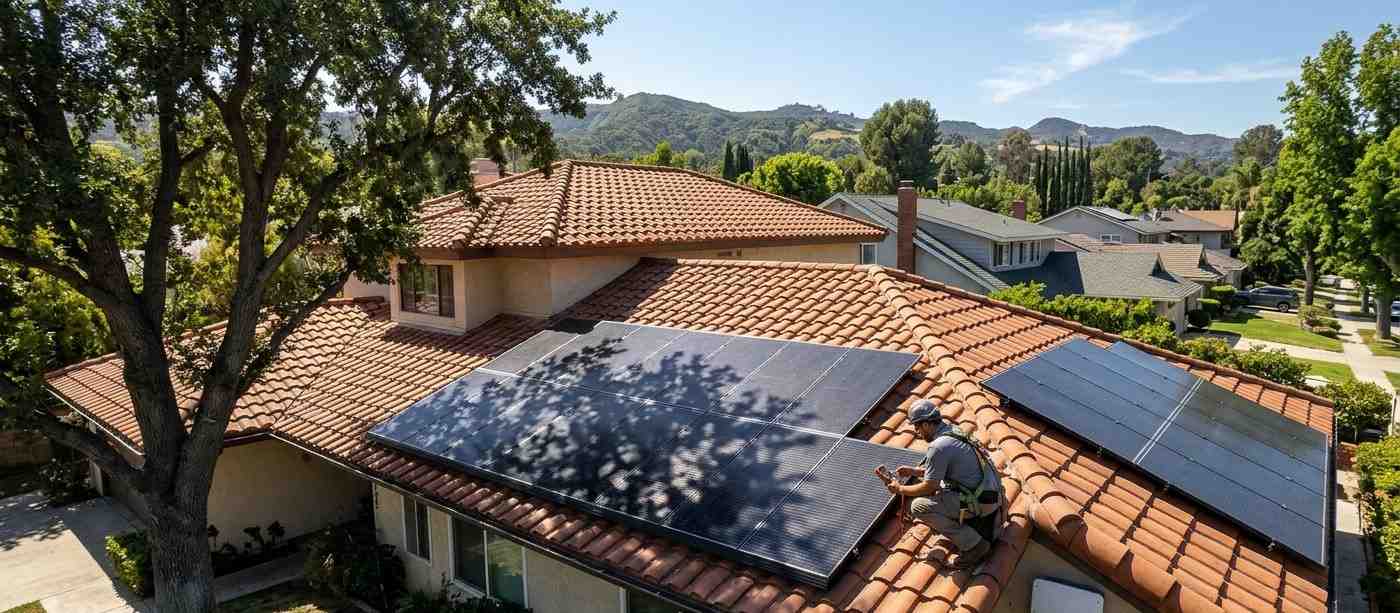
Shade and roof direction both change how much power solar panels produce. A small shadow can cut output by more than the shaded area suggests, and a south-facing roof usually produces more than an east- or west-facing roof. For solar panels in Encino, an installer should measure shade and direction on your actual roof before designing the system, since trees, hillsides, and roof planes differ from house to house. In most cases, neither factor rules out solar on its own, and the right equipment and layout can recover much of the loss.
How Shade Reduces Solar Panel Output
When panels are connected in a series, like old holiday lights, one shaded part can reduce the output of the whole group. This means a small shadow can have a bigger impact than you’d think. Bypass diodes help reduce the problem, but they can’t bring back the sunlight that’s blocked.
Shade from clouds is different from a sharp shadow cast by a tree or chimney. When panels are in general shade, they usually make about half as much power as they do in direct sunlight.
Common Sources of Shade and How They Change
Shade often comes from trees, hills, nearby houses, or roof features like chimneys and vents. Young trees can also become a problem as they grow. Shade changes throughout the day and year, as shown in the table.
| When | What Changes | Why It Matters |
| Morning | Trees and homes to the east cast shade | Cuts early production |
| Midday | Shadows from roof features are shortest | Peak production hours |
| Afternoon | West-side trees and buildings cast shade | Matters more under time-of-use rates |
| Winter vs. summer | The sun sits lower in winter | Shade absent in summer can appear in December |
A single photo can’t show how shade changes over time, so installers track shade patterns throughout the year.
Equipment That Helps With Shade
The type of inverter and panels you choose affects how well your system deals with shade:
| Option | How It Handles Shade | Trade-Off |
| String inverter | One shaded panel can lower the whole string | Lower cost |
| Microinverters | Each panel works on its own | Higher cost per panel |
| Power optimizers | Per-panel control with one inverter | Added cost and parts |
| Half-cut or shingled panels | Some designs handle partial shade better | Check the datasheet |
These options help reduce power loss, but they can’t remove shade from a panel.
How Roof Orientation and Pitch Affect Production
In the Northern Hemisphere, south-facing roofs produce more power over a year than other directions. A compass reading within about 15 degrees of south is a quick check. These points put other directions in context:
- East-west layouts typically produce about 10 to 15% less than an ideal south-facing array.
- Being 10 degrees off ideal costs under 1% of yearly output.
- North-facing roofs perform poorly, and installers usually avoid them.
- Direction matters more than angle, and a tilt of about 15 to 40 degrees works well for south-facing panels.
Flat roofs use tilted racks, while steep roofs can take two to four times longer to install.
East, West or South: What Matters for Your Bill
Kilowatt-hours don’t tell the whole story. With time-of-use pricing, electricity is often more expensive in the late afternoon, so west-facing panels can actually save you more money than south-facing ones, even if they make less total energy. Adding a battery lets you use your solar power in the evening. California’s net billing tariff applies to SCE, PG&E, and SDG&E customers, but most homes in Encino use LADWP, which has its own solar rules.
Solar Panels in Encino: Hills, Trees, Permits and Your Utility
Hillside lots, large trees, and the strong San Fernando Valley sun all affect how solar systems are designed in Encino, Tarzana, Sherman Oaks, and Woodland Hills. If you’re planning solar panels in Encino, keep these points in mind:
- Get the shade and orientation assumptions in writing before you sign.
- Review HOA or neighborhood rules on panel visibility.
- Expect LADBS building and electrical permits, including a roof plan and wind-load calculations.
- Confirm current LADWP terms before comparing savings.
Solar Unlimited is a veteran-owned, family-operated solar company in business since 1980, serving Encino and Sherman Oaks with site assessments and custom system design.
Conclusion
Shade and roof direction affect how much power you get, but they usually aren’t deal-breakers. With a good survey, the right inverter, and smart panel placement, even a tricky roof can work well. Solar Unlimited offers free site assessments and detailed proposals, so you can see how your roof will perform before making a decision.
Frequently Asked Question
Do solar panels work in the shade?
Yes, solar panels do work in the shade, but they produce less power. In general shade, panels make about half as much as they do in direct sunlight. If one panel in a series is partly shaded, it can lower the output of others nearby. Microinverters or optimizers help keep one shadow from affecting the whole system.
How much power do you lose with shade?
There isn’t one answer. How much power you lose depends on how much of your panels are shaded, when the shade happens, the season, and the equipment you use. Shade in the morning usually causes less loss than shade at midday. Installers will estimate the loss for your roof and should include that in your written production estimate.
Is a west-facing roof bad for solar panels in Encino?
No, a west-facing roof isn’t bad for solar panels in Encino. It usually makes a bit less energy than a south-facing roof, but it produces more in the late afternoon. With time-of-use pricing, that afternoon power can actually be worth more. Since most Encino homes use LADWP, their current rates and solar rules will determine the value of a west-facing system.
Can I trim trees to improve solar production?
Often, yes, trimming trees can help you get back a good amount of lost solar output. Be sure to check local tree and HOA rules first, since some trees are protected. Compare the cost of trimming with the extra power you’ll get, and keep in mind that trees will grow back. Your installer can show you how your system would perform with and without trimming, so you can make a proper choice.
How do installers check shade before installing?
Installers begin by visiting your home to note your roof’s shape, angle, direction, and any obstacles. They use a shade analysis or sun-path survey to see how shadows move across your roof throughout the year, not just on a single day. Panels are then placed where they’ll get the most sun, and your written estimate should include the expected shade loss.