Most rooftop solar panels in Studio City lose a bit of power for every degree their cells get hotter than 25°C (77°F). Even during heat waves, long, sunny days help keep daily energy production high, so the overall effect is usually small. The amount of power lost depends on how hot the cells get, which is often much higher than the air temperature you see in weather reports. Choosing panels with a low temperature coefficient, making sure air can flow under the panels, and keeping the glass clean all help reduce these losses.
Do Solar Panels Produce Less Power in a Studio City Heatwave?
Yes, solar panels produce a little less power around midday during a heat wave. Manufacturers test panels at 25°C (77°F), but when it gets hotter, the panels can’t reach their full rated power.
Even so, daily energy production usually stays strong because heat waves mean long, sunny days. You might notice a dip in your monitoring app, especially when your air conditioning is running a lot, but the panels are still working as they should.
Why Solar Panels Lose Efficiency as They Get Hotter
Every solar panel datasheet shows a temperature coefficient, which tells you how much power is lost for each degree above 25°C. Most panels lose between -0.30% and -0.50% per degree, while premium panels can be as low as -0.26%. The closer this number is to zero, the better the panel handles heat.
Multiply the coefficient by the degrees above 25°C to estimate the loss:
| Coefficient | Loss at 45°C (113°F) | Loss at 65°C (149°F) |
| -0.26% per °C (premium) | 5.2% | 10.4% |
| -0.35% per °C (average) | 7.0% | 14.0% |
| -0.45% per °C (standard) | 9.0% | 18.0% |
When you compare these numbers in different quotes, you can see which panels will perform better during hot weather.
How Hot Do Solar Panels Actually Get on a Studio City Roof?
During a heat wave, solar cells can get as hot as 149°F (65°C), according to EnergySage. NOAA data shows that nearby Burbank has about 11 days each year at or above 100°F, and the National Weather Service recorded a record 101°F at Hollywood Burbank Airport on October 4, 2026.
Three installation conditions affect cell temperature:
- Mounting Clearance: Extra space under panels lets warm air escape.
- Wind Exposure: Steady breezes carry heat off the panels.
- Array Spacing: Gaps between panels help air circulate.
A good installer will take all three of these factors into account when designing your system.
Normal Heat Dip or a Real Problem? What to Check in Your Monitoring App
A normal heat dip looks like a smooth curve in your monitoring app, with lower output at midday that recovers as it cools down. It’s better to look at your daily kilowatt-hour totals instead of just checking at noon. If you see sharp or lasting drops, it’s probably due to dust, debris, or new shade, not just heat.
Call your installer if you see these red flags:
- Zero Midday Output: Production drops to zero in full sun, which usually points to a tripped breaker, inverter fault, or wiring issue.
- One Weak String: One panel group produces far less than the rest under the same sun.
- Low Output After the Heat Breaks: Output stays low on a cool, sunny day after the heat wave.
- Inverter Error Codes: Heat derating or thermal shutdown usually resets once temperatures fall, but a recurring code needs a service visit.
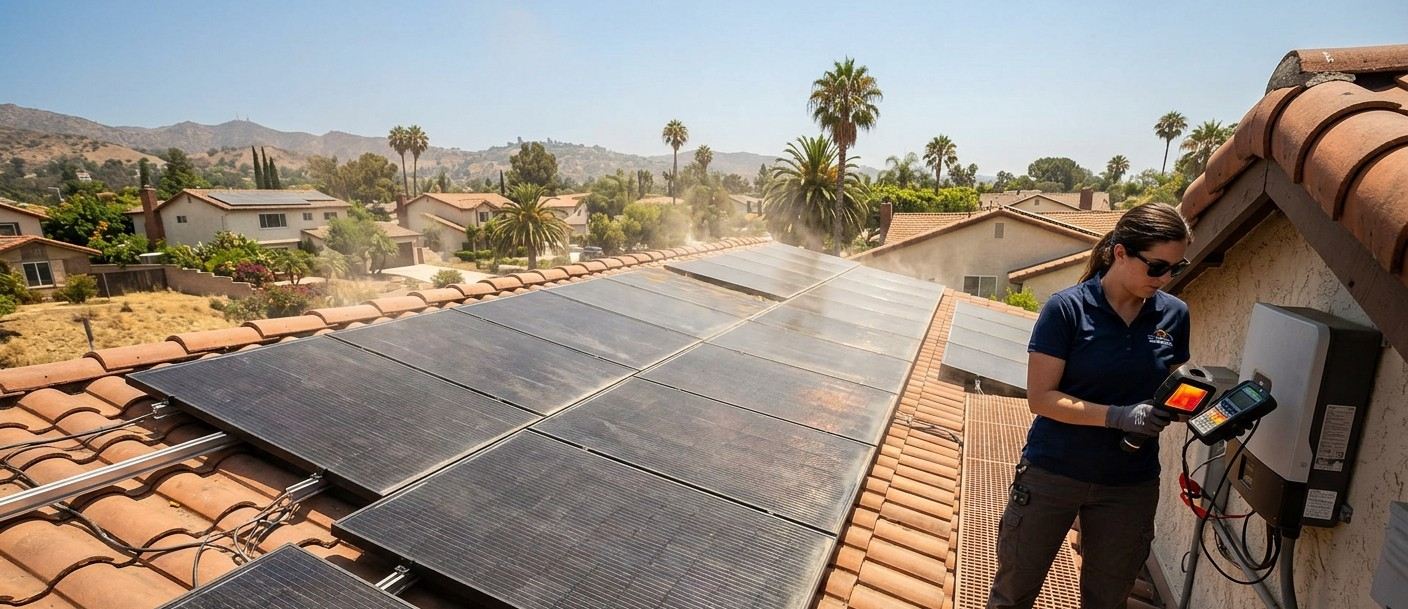
Don’t try to get on a hot roof yourself. A technician can safely check for hot spots using a thermal camera.
How to Protect Your Solar Output During Studio City Heat Waves
There are four main ways to reduce heat-related losses, and most are easiest to put in place before your system is installed.
Choose Panels With a Low Temperature Coefficient
Check the temperature coefficient on the datasheet for every panel quote you get. Microinverters and power optimizers help with shade and panel differences, but a low temperature coefficient helps keep your power up during hot midday hours.
Design for Airflow and Smart Inverter Placement
Mounting panels a few inches above the roof lets heat escape from underneath. At Solar Unlimited, we suggest putting inverters on a shaded wall or inside a garage, because they work better when they stay cool.
Keep Panels Clean
Dust and pollen block sunlight, and uneven buildup like bird droppings can create hot spots on cells. We suggest professional cleaning when your monitoring app shows a gradual decline and after wildfire ash.
Add Battery Storage for Evening Peaks
A battery lets you save extra solar power from the afternoon to use after sunset, when your panels aren’t making electricity, but your air conditioning might still be running. It can also provide backup power during outages and help you avoid buying electricity during expensive peak hours.
Studio City Factors That Change Heat Performance
Three local factors shape how much sun and heat each array receives:
- Roof Orientation and Tilt: South-facing arrays capture the most sun across the day.
- Tree and Hillside Shade: Trees and hills south of Ventura Boulevard can shorten sun hours.
- Roof Material and Color: Light-colored, reflective roofs stay cooler than dark roofs.
Talk about these factors with your installer before you make a final decision on your system design.
Why Studio City Homeowners Can Trust This Guide
At Solar Unlimited, we’ve been installing solar systems throughout Greater Los Angeles and Ventura County since 1980. We’re a veteran-owned, family-run company based in Arcadia, and we’ve installed over 12,000 systems for homes and businesses.
When you’re choosing an installer, check their license using the Contractors State License Board (CSLB) online tool, ask for local references, and compare written quotes that include panel models, temperature coefficients, inverters, and warranties.
Conclusion
Heat reduces panel power a little, but long, sunny heat-wave days help keep your daily energy production high. The choices you make, like picking panels with a good temperature coefficient, allowing for airflow, and placing inverters wisely, affect how much power your system keeps during hot weather. If you’re planning a new system or want us to check your current one, our team at Solar Unlimited offers free site assessments. Visit our service page to learn more about solar panels in Studio City and how we install them.
FAQs
How much efficiency do solar panels lose in extreme heat?
When the cell temperature reaches 65°C, a typical solar panel loses about 14% of its maximum power.
How hot can solar panels get during a heat wave?
On a 100°F afternoon, rooftop solar panels can get as hot as 136°F, which is about 36°F hotter than the air.
Will a Studio City heat wave damage my solar panels?
Certified panels that are installed correctly can handle heat waves well and meet International Electrotechnical Commission (IEC) 61215 thermal-cycle testing standards.