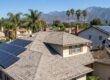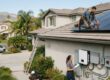

California solar incentives are primarily driven by state and utility programs, as the federal residential tax credit for homeowner-purchased systems expired at the end of 2025 under the One Big Beautiful Bill Act (OBBA). Fortunately, homeowners can easily offset investment costs through property tax exclusions and regional storage rebates. Choosing third-party financing models, like Power Purchase Agreements (PPAs) and solar leases, allows providers to pass on eligible commercial tax credits directly to consumers. These localized options ensure that investing in Studio City solar panels remains an excellent, highly cost-effective path to long-term utility savings.
California Solar Incentives Overview
The main 2026 solar incentives that you need to know. Since Studio City falls under SCE territory, the following program guidelines apply to your project.
| Incentive | Value | Who Qualifies | Deadline | SCE / LADWP Applicability |
| Property Tax Exclusion | Avoid higher property taxes | Solar owners | January. 1, 2027 | Applies |
| NEM 3.0 Net Billing | Net billing export credits | New solar customers | Active | SCE applies |
| SGIP Battery Rebate | Limited RSSE funding | Qualified applicants | Funding dependent | SCE applies |
| DAC-SASH | Up to $3/W | Eligible households | Active | SCE applies |
| PACE Financing | Property-based financing | Property owners | Active | Available |
| Local Utility / City Rebates | Varies by program | Depends on location | Varies | Check availability |
These incentives can often be combined to increase overall savings.
California Net Billing (NEM 3.0): What Studio City SCE Customers Must Know
Studio City homeowners fall under Southern California Edison’s service territory, making NEM 3.0 the applicable solar compensation program. NEM 3.0 became the standard compensation structure for new SCE solar customers in April 2023.
Important facts about NEM 3.0 include:
- Export Credits: Typically about $0.05 to $0.08 per kilowatt-hour.
- Lower Payouts: Compensation is lower than under NEM 2.0.
- Battery Advantage: Energy storage improves solar value.
- Declining Adders: Available bonus values decrease over time.
The key differences are:
- NEM 2.0: Exported electricity received credits close to retail rates.
- NEM 3.0: Exported electricity receives lower net billing compensation.
Maximizing your financial return under NEM 3.0 requires a shift in strategy. For Studio City residents, adding battery storage to a solar system is essential to making the investment truly pay off.
SGIP Battery Rebate: Is It Still Available in Studio City in 2026?
The Self Generation Incentive Program (SGIP) remains available only to limited groups.
Current program conditions are:
- General Market Funding: Closed.
- RSSE Applicants: Limited funding remains.
- Reserved Budgets: Most funds have been allocated.
- Waitlists: Active for several categories.
| Eligibility Category | 2026 Status |
| General Market | Closed |
| RSSE Applicants | Limited availability |
| Disadvantaged Communities | May qualify |
| High Outage Risk Areas | May qualify |
In 2026, SGIP funding is highly targeted toward helping income-qualified families and households in high-risk outage areas secure energy security. To find out if your property meets the current criteria, check your eligibility directly through the SCE website or consult your local city environmental office.
DAC-SASH: Free or Low-Cost Solar for Qualifying Studio City Residents
DAC-SASH helps eligible households install solar at reduced cost. Incentives can reach up to $3 per watt for qualifying systems.
To qualify, homeowners generally must:
- Be an SCE customer
- Live in an eligible disadvantaged community
- Meet income requirements
- Own and occupy the property
- Complete application requirements
The program is administered by GRID Alternatives and can be combined with select local solar initiatives. Eligible Studio City residents in qualifying ZIP codes may access solar with little or no upfront cost through DAC-SASH.
PACE Financing: Install Solar in Studio City with Zero Down
Property Assessed Clean Energy (PACE) financing allows homeowners to install solar without a large upfront payment. The financing is tied to the property and repaid through property tax bills.
The main benefits are:
- Ownership: Homeowners own the system.
- Repayment: Payments are spread over 10 to 20 years.
- Accessibility: Available throughout Los Angeles County.
- Credit Structure: Debt is tied to the property rather than personal credit.
PACE differs from a solar lease or PPA. Homeowners retain ownership and any available ownership-related benefits.
Local SCE & City of LA Solar Incentives for Studio City (2026)
In addition to statewide programs, homeowners may find local opportunities that improve project economics.
Examples include:
- Time-of-Use Optimization: Lower electricity costs through solar-friendly rate plans.
- Permit Fee Savings: Potential reductions worth $200 to $800.
- Expedited Permitting: Faster approval processes in some jurisdictions.
These incentives vary by zip code and funding availability. Always verify directly with SCE or the City of Los Angeles before assuming eligibility.
How to Stack Solar Incentives: Maximizing Your Studio City Savings in 2026
Combining incentives often produces the strongest financial outcome.
A recommended order is:
- Property Tax Exclusion before the January 1, 2027, assessment deadline.
- NEM 3.0 Enrollment while bonus adder values remain available.
- Battery Installation to maximize on-site energy use.
- PACE Financing if upfront out-of-pocket capital is limited.
- Local Incentives from the City of LA, where applicable.
Consider a homeowner installing a 7kW solar system with battery storage. A $22,000 project could avoid roughly $150 to $260 per year in property taxes through the exclusion. Over 25 years, that equals about $5,000 in savings.
For homeowners evaluating Studio City solar panels, stacking available incentives can significantly improve long-term returns.
Conclusion
The federal residential solar tax credit has expired, but California homeowners continue to have access to several valuable programs in 2026. The Property Tax Exclusion, NEM 3.0, DAC-SASH, PACE financing and select local incentives can help reduce upfront costs and strengthen long-term savings. At Solar Unlimited, we assist homeowners by explaining available options and identifying programs that align with individual property needs. Acting before key deadlines can help maximize the overall value of a solar investment.
Sources
https://taxpolicycenter.org/sites/default/files/2026-03/OBBBA_Preliminary_Assessment_2026-03-23.pdf
FAQs
Is the federal solar tax credit still available in California in 2026?
The residential credit expired on December 31, 2025. Commercial projects remain eligible and some lease structures may still benefit indirectly.
What solar incentives are available for Studio City homeowners in 2026?
Some of the available programs include Property Tax Exclusion, NEM 3.0, DAC-SASH, PACE financing and local incentives.
When does the California property tax exclusion for solar expire?
It expires for new installations on January 1, 2027. Installing before then helps preserve future tax savings.
Can I still get SGIP battery rebates in Studio City in 2026?
Certain RSSE income-qualified applicants may qualify. General market funding is closed. Check eligibility through SCE.